Content
Another method is to use volume indicators, such as On-Balance Volume (OBV), Accumulation/Distribution Index (A/D), Money Flow Index (MFI), and so on. When combined with various volume indicators, investors can better distinguish between meaningful market moves and temporary fluctuations. Volume, like any technical indicator, works best when used with forms of analysis rather than in isolation. Volume is a leading indicator, as are the other List of cryptocurrencies indicators listed in this article, meaning it can help traders predict future price movements.
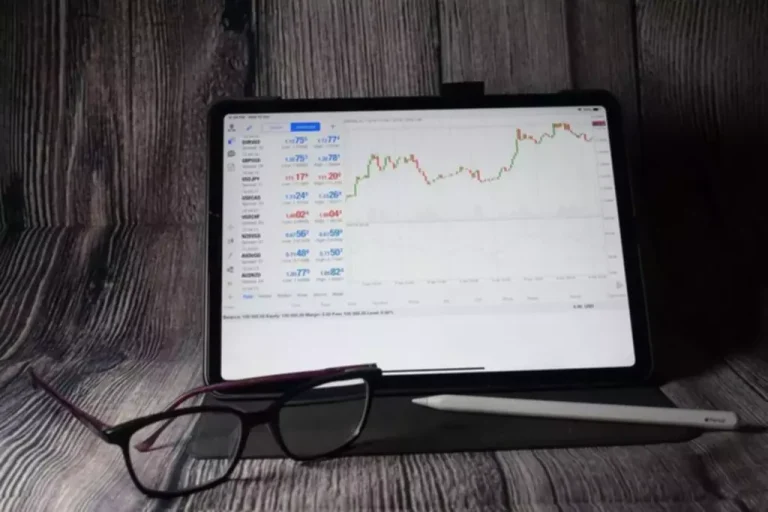
Types of Indicators to Measure Stock Volume

However, while volume is a crucial metric, divergences frequently occur, and volume can’t be used in isolation to make buy or sell decisions. Always use multiple indicators when looking for trading opportunities, and consult with an advisor before making any changes to your investment plan. Consolidation is when a stock trades in a tight range as investors survey the https://www.xcritical.com/ landscape and await the next signal. Despite this lack of movement, volume can still be helpful in consolidation phases. Low volume during consolidation indicates limited interest in the stock, while higher volume could signal buying or selling pressure under the surface.
What Is Volume in Stock Trading? How Investors Can Use It
For instance, if you observe a currency pair’s price moving through a series of small incremental changes, each of those price changes contributes to the tick volume. This mechanism enables traders to gauge the intensity of trading activity within the forex market. In this article, we will dive deep into everything you need to know about volume trading, from the popular types of volume indicators to how to trade different market conditions. It’s often smart to combine trading signals generated by changes in volume with a shift in a company’s fundamentals. Simple stock screens that identify securities with sharp changes in volume are great candidates for traders who trading volume are looking to create a watch list.
- In addition, comparing the volume to historical data can also provide insights into whether the current momentum is likely to continue or if a reversal is likely.
- Today you find volume analysis on things like trading desks and futures trading and as such can come in handy in the current market.
- Using volume to measure market momentum involves analyzing the volume of shares or contracts that are being traded in a particular stock or market.
- Unlike the Simple Moving Average (SMA), which treats each price point equally, VWMA emphasizes times with higher trading volume, providing a clearer picture of market sentiment.
- For most forex traders, liquidity is usually not an issue, especially in major pairs.
- This combination will often result in higher volume around the edges of the trading range, particularly on a breakdown.
What Does High Volume Mean in the Stock Market?
Fluctuation above and below the zero line can be used to aid other trading signals. The Klinger oscillator sums the accumulation or buying and distribution or selling volumes for a given period. These are generally sharp moves in price combined with a sharp increase in volume that signals the potential end of a trend. Participants who waited and are afraid of missing more of the move begin to pile in at market tops, exhausting the number of buyers. CMF gives traders a clear picture of the market sentiment and helps them make informed decisions based on the prevailing pressure.
Divergences between the A/D line and an asset’s price can also be used to spot potential trend reversals. Volume analysis strategies combine volume data with price movements to identify market trends, reversals, and trading opportunities. These strategies enhance trading decisions by revealing the strength and conviction behind price movements. Volume trading strategy is a trading method that involves analyzing the volume of shares or contracts that are being traded in a particular stock or market. The idea behind this strategy is that high trading volume can indicate strong buying or selling pressure, which can be used to make trading decisions. Heavy trading volume typically signals strong conviction behind a price move, while light volume can suggest uncertainty or lack of commitment from market participants.
For example, a trend with increasing volume over time may indicate a strong bullish trend, while decreasing volume may indicate a potential reversal. When both prices and volume are falling, it usually signals a weakening downtrend. Fewer traders are participating, and the selling pressure may be dissipating. Indeed, the downtrend could be losing momentum, but it does not guarantee a reversal immediately.
Customers of TWP programs and consumers of its content should take this into account when evaluating the information provided or the opinion being expressed. The backtests we did showed that a volume filter paid off, and we believe this is far from any form of curve fitting. That said, you need to backtest yourself to find what works for you. For example, we discovered that volume could be a crucial filter for single stocks. In addition, you should constantly review and evaluate your current strategy and make adjustments as needed.
Volume analysis in risk management increase trading success and profit potential. Different methods is used and with the help of proper techniques they make very organized trading environment that is very useful for futures traders. Also traders are benefited from this as they take proper analysis measures and use proper techniques to complete trades. Developed by Marc Chaikin, this oscillator combines the concept of the A/D line with MACD model to assess the strength and direction of buying and selling pressure. The oscillator’s position relative to the zero line is also critical for gauging trend strength. A move above zero suggests that upward momentum is building, while a move below zero implies that downward pressure is increasing.
Volatility is where the huge price swings happen that can potentially earn you profits. A lot of penny stock traders have a black-and-white mentality when it comes to volume … High volume GOOD. Even if you’re too late to get in on the trading action, you can still learn from the stock’s price action. The more shares in movement, the easier the transaction will go through. All investments are subject to risk of loss, which you should consider in making any investment decisions.
However, any customer will be responsible for considering such information carefully and evaluating how it might relate to that viewer’s own decision to buy, sell or hold any investment. We are not writing this blog to speculate, so we leave it up to you to judge. To summarize, volume worked well as a filter for the Turnaround Tuesday trading strategy.
For example, as seen in the image below, if the volume spikes suggest that the buying pressure increases, you enter a long buying position. A/D determines whether the currency pair is experiencing accumulation (buying) or distribution (selling) by comparing the currency pair’s closing price to the price bar’s range. It is the metric that quantifies the number of units or shares of an asset that have changed hands during a specified timeframe.
Our team has identified the five stocks that top analysts are quietly whispering to their clients to buy now before the broader market catches on… MarketBeat has just released its list of 20 stocks that Wall Street analysts hate. These companies may appear to have good fundamentals, but top analysts smell something seriously rotten.
Volume indicators are mathematical formulas that are visually represented in the most commonly used charting platforms. Each indicator uses a slightly different formula and traders should find the indicator that works best for their particular market approach. Imagine volume increases on a price decline and then the price moves higher followed by a move back lower. It’s usually interpreted as a bullish sign if the price doesn’t fall below the previous low on the move back lower and if the volume is diminished on the second decline. A/D enables forex traders to assess the market’s overall sentiment towards a specific currency pair.
Trade volume for stock and other securities tells investors how frequently shares in a company are being bought and sold. For most forex traders, liquidity is usually not an issue, especially in major pairs. But for stock traders, low liquidity can cause issues like being stopped out prematurely or struggling to enter/exit at their preferred price. High volume implies high liquidity, making it easier for traders to enter and exit positions without slippage or high spread costs. On the other hand, an asset with low volume and liquidity may be more susceptible to sudden volatility and greater costs. If you really want to make smart trades, you need to be obsessed with the stock market and how it works.